Moisture & Peeling Guide — Joplin, MO
Will Epoxy Peel? The #1 Cause of Coating Failure
Last updated: July 2026
Moisture vapor trapped beneath a slab is behind more failed epoxy floors than every other cause combined. Here’s how it’s actually tested for, what mitigation looks like, and how to tell if it’s already a problem.
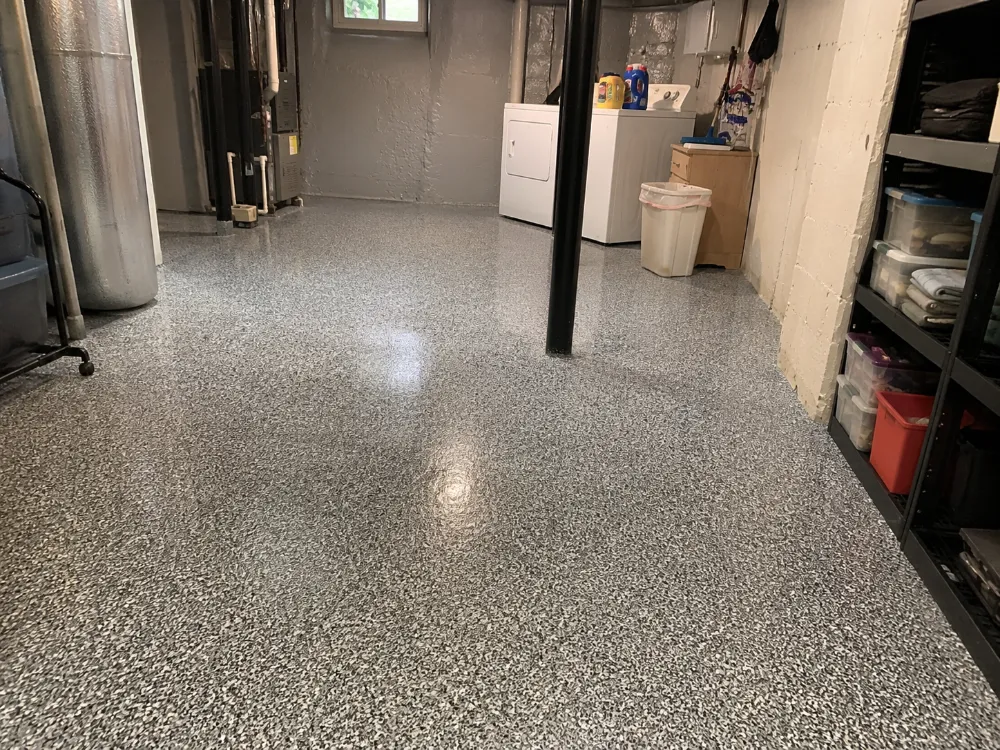
In This Guide
The Short Version
Peeling Is a Bond Failure, Not a Product Failure
Epoxy doesn’t peel because the material is bad — it peels because something came between the coating and the concrete it was supposed to bond to. Concrete is porous, and slabs sitting on or below grade constantly wick groundwater upward through capillary action. That water has nowhere to go once it hits an impermeable epoxy layer, so it builds up as vapor pressure underneath the coating until the bond gives way.
This is different from the general wear-and-tear causes covered in our epoxy lifespan guide — UV fading, traffic wear, and chemical exposure all degrade a coating gradually from the top down — see our care guide for avoiding that kind of wear. Moisture vapor failure works from underneath, and it’s the reason a floor can look perfect on install day and start bubbling eighteen months later.
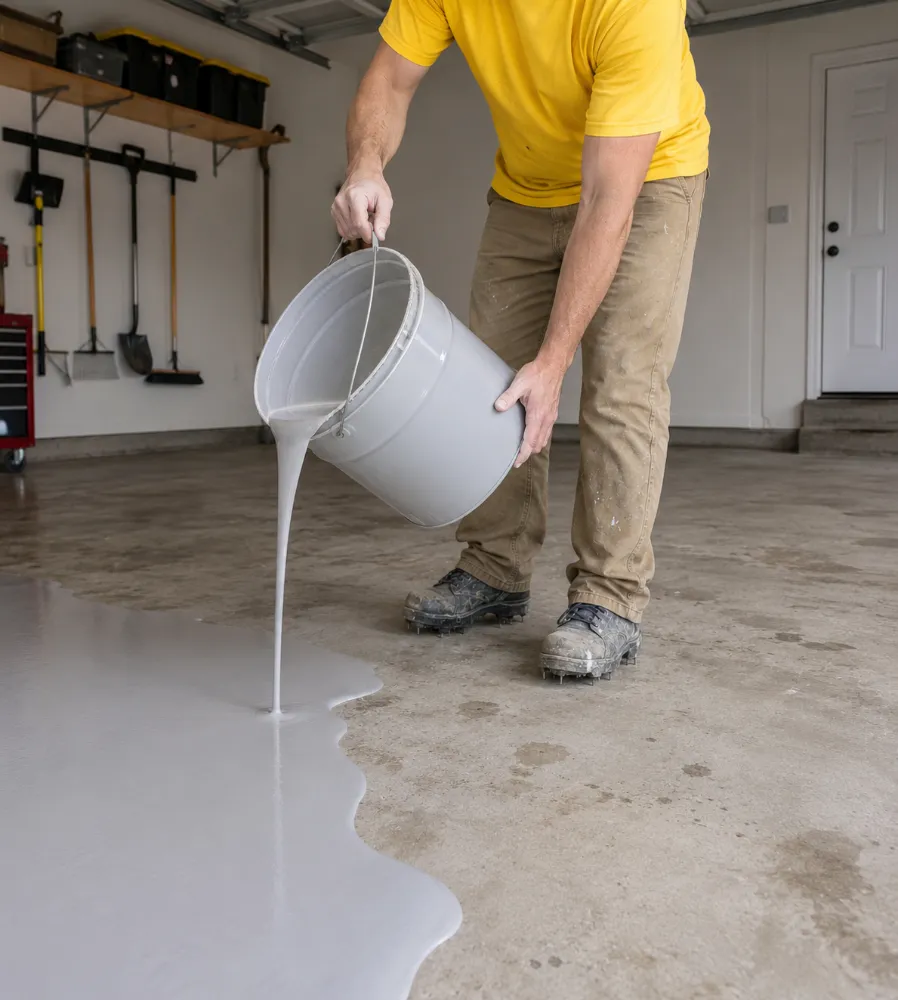
How We Actually Test
Two Tests That Tell Us Whether a Slab Is Safe to Coat
| Test | What It Measures | Duration |
|---|---|---|
| Calcium Chloride Test | Moisture vapor emission rate (lbs per 1,000 sq ft per 24 hrs) | 60–72 hours |
| In-Situ RH Probe Test | Relative humidity inside the concrete itself | 24–72 hours |
Calcium Chloride Test
A sealed dome containing calcium chloride is placed on the slab for up to three days. The salt absorbs moisture from the surface, and the weight gain converts to a vapor emission rate. It’s the older, more widely used method — but it only reads surface-level moisture, not what’s happening deeper in the slab.
In-Situ RH Probe Test
A small hole is drilled to 40% of slab depth and a humidity sensor is inserted and sealed in for at least 24 hours. This reads the actual internal condition of the concrete, which is why it’s increasingly the preferred method for basements and slab-on-grade floors where deeper moisture is common.
For most garage floors on a well-draining slab, a calcium chloride test is usually sufficient. For basement floors and any slab with a history of water intrusion, we run the RH probe test since it catches moisture the surface test can miss. Either way, testing happens before we quote a final price — it’s the single biggest variable in what a job actually needs.
Quick Self-Check
How Likely Is Moisture to Be an Issue?
Answer these two questions for a rough read on your risk level. This isn’t a substitute for an actual test — just a way to know what to expect.
Want a definitive answer? Ask about testing during your free estimate.
Estimated Risk Level
Low
Above-grade floors with no water history rarely need extensive mitigation.
If Testing Comes Back High
What Vapor Mitigation Actually Involves
Epoxy Vapor Barrier Primer
A specialized primer coat applied directly to the prepped concrete that blocks vapor transmission before the main coating system goes down. Handles most moderate readings.
Densifying Sealer
Penetrates and chemically hardens the top layer of concrete, reducing porosity before a vapor barrier primer is applied. Often paired with the primer on higher readings.
Exterior Drainage Fix
For the highest readings, the real fix is often outside the slab — grading, gutter extensions, or a French drain to stop water from reaching the concrete in the first place.
Most readings we see in Joplin basements fall into the range a vapor barrier primer handles on its own — it adds a day to the install timeline but doesn’t change the overall system dramatically. It’s the rare high-reading slab, usually one with a documented history of flooding, where we start talking about exterior drainage work alongside the coating itself. Either way, this gets identified during testing, not guessed at after the fact.
If It’s Already Happening
Peeling Won’t Fix Itself
Once a section starts lifting, moisture and debris work their way underneath the loose edge and the problem spreads outward from there. A small patch of bubbling today is a bigger patch in six months.
Get a Free Inspection-
Don’t just patch over it
Recoating over a peeling section without removing the failed coating and addressing the moisture source guarantees a repeat failure.
-
Get the slab tested now
Even if the old coating clearly failed from moisture, testing tells us the actual reading — which determines whether a primer alone will hold or drainage work is needed too.
-
Full removal, not spot repair
A moisture-related failure means the whole floor was exposed to the same conditions, even where it looks fine — we grind off the entire existing coating before recoating.
Moisture FAQ
Questions We Get About Peeling
Not sure if your slab needs testing? Ask us during your free estimate.
Get a Free Estimate- We recommend it for any slab on or below grade — basements, garages, and ground-floor slabs. Upper-floor concrete over a finished space below is lower risk, but we still check the slab’s condition and history before skipping it.
- Testing itself is included in your free estimate. If mitigation is needed, a vapor barrier primer typically adds a modest amount to the overall job — we’ll give you the exact number before any work starts, not after.
- DIY plastic-sheet moisture tests exist, but they’re unreliable and don’t produce the quantitative reading needed to choose the right mitigation system. Professional calcium chloride or RH probe testing is the only way to get a number you can actually act on.
- It’s the most common cause by far, but not the only one — skipped surface prep (no mechanical grind) or coating over an incompatible old sealer can also cause peeling without moisture being involved. Testing helps rule moisture in or out.
Free Estimates
Every Floor Gets Tested —
Before We Quote a Price
No guesswork on moisture. We test, then tell you exactly what your slab needs.
Get My Free Estimate