Epoxy Flooring Lifespan Guide — Joplin, MO
How Long Does Epoxy Flooring Really Last?
Last updated: August 2026
A real look at how many years you can expect from a garage, basement, or commercial epoxy floor — and the handful of things that quietly cut that lifespan short.
In This Guide
Quick Reference
How Long Each Coating System Actually Lasts
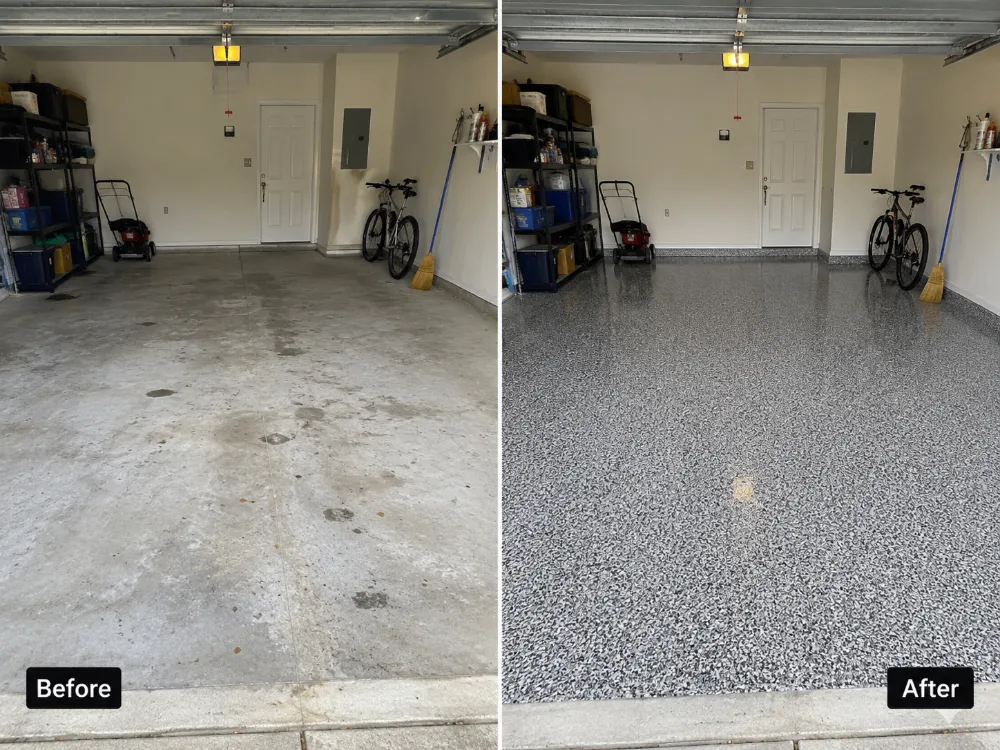
Lifespan comes down to two things: the quality of the system installed and how much abuse the floor takes. A properly installed flake broadcast garage floor in Joplin typically holds up for 15–20 years under normal residential traffic, while a budget solid-color coating on the same floor might only make it 8–12 before it starts showing wear in the tire paths.
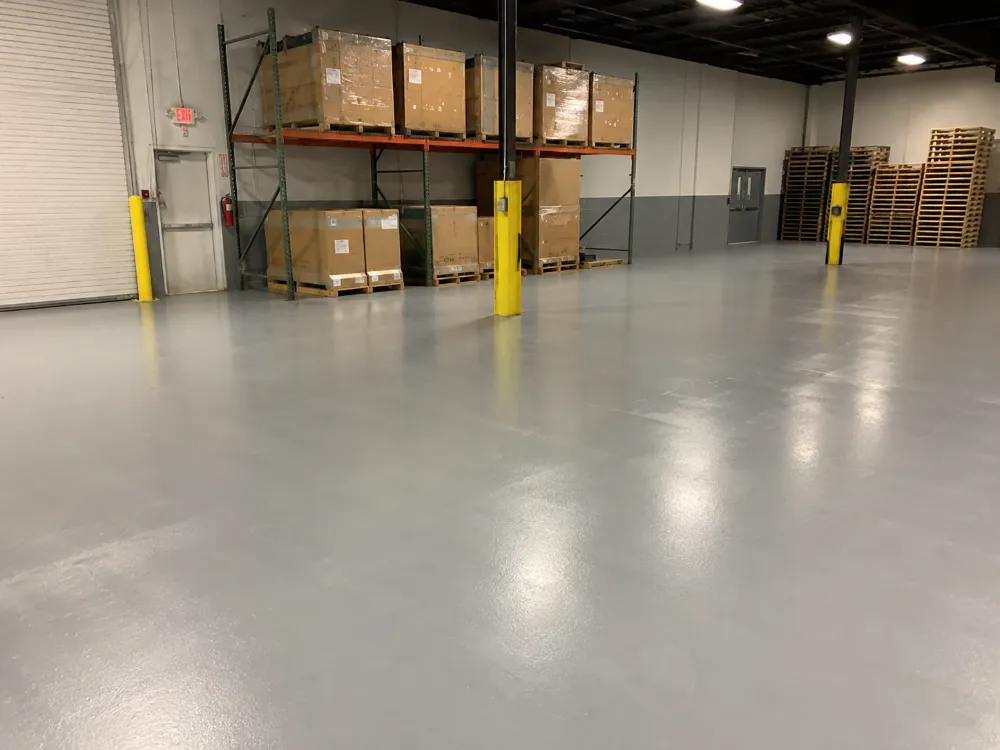
Commercial and warehouse floors see far more abuse — forklift traffic, chemical spills, constant foot traffic — so a high-build commercial system is engineered to hold up for 10–15 years even under that load, versus 3–5 years for a coating that wasn’t rated for industrial use. Metallic and marble-effect floors in lower-traffic spaces like showrooms or living areas can last 15–20+ years since they’re rarely exposed to the same wear as a working garage floor.
| Coating System | Typical Lifespan | Best For |
|---|---|---|
| Solid Epoxy | 8–12 years | Budget garages & low-traffic basements |
| Flake Broadcast | 15–20 years | Garages, workshops — our most popular system |
| Metallic / Marble | 15–20+ years | Showrooms, living spaces, low-abrasion areas |
| Commercial / Industrial | 10–15 years | Warehouses, high-traffic commercial floors |
Ranges assume professional installation with full surface prep and normal use. Poor prep or heavy abuse can cut any of these numbers in half — see the factors below.
Quick Self-Check
Is Your Floor Showing Signs of Wear?
Check any symptoms you’re noticing. This isn’t a diagnosis — just a quick read on whether it’s worth having someone take a look.
Want a real answer? Get a free inspection — no charge, no pressure.
Check any symptoms above to see what they usually mean.
The Real Culprits
Five Things That Cut a Floor’s Life Short
Moisture Vapor
The single biggest cause of early peeling. Coating over a slab that hasn’t been tested for moisture is asking for failure within a year or two.
Skipped Surface Prep
Epoxy bonds to concrete mechanically. Skipping the grind-and-etch step means the coating is only ever loosely sitting on top — it’s a matter of when, not if, it lifts.
UV Exposure
Standard epoxy yellows and chalks under direct sunlight. Outdoor spaces like patios need a UV-stable topcoat or the finish degrades within a couple of summers.
Heavy or Sharp Traffic
Dragging metal shelving, dropping tools, or forklift traffic on an under-rated coating wears through the topcoat far faster than normal foot and tire traffic.
Chemical Exposure
Oil, gasoline, and harsh cleaners can break down a coating not rated for chemical resistance — common in garages and commercial kitchens or shops.
Freeze-Thaw Cycling
Joplin’s winters push moisture in and out of concrete repeatedly. A coating without proper flexibility and adhesion can crack along old slab seams over time.
In our experience, moisture and skipped prep account for the overwhelming majority of early epoxy failures we get called out to look at — not the coating itself. That’s why every basement floor we quote gets a moisture test before we commit to a system, and why our garage floor installs always include a full mechanical grind rather than a quick acid etch.
Simple Habits, Big Payoff
Getting the Full 20 Years Out of Your Floor
A properly installed epoxy floor needs surprisingly little upkeep — these habits are what separate a floor that looks new at year 15 from one that’s already showing its age at year 5. For the full daily-to-seasonal routine, see our care and maintenance guide.
Ask Us About Maintenance-
Sweep and mop regularly
Grit acts like sandpaper under tires and foot traffic — a weekly sweep prevents most surface scuffing.
-
Use furniture pads under heavy equipment
Dragging metal shelving or jacks across the floor is one of the fastest ways to gouge a topcoat.
-
Clean spills promptly
Oil, gas, and battery acid won’t destroy a properly rated coating overnight, but they shouldn’t sit for days either.
-
Skip the harsh chemical cleaners
A mild soap and water mix is all epoxy needs — ammonia-based cleaners can dull the topcoat over time.
When to Take Action
Signs It’s Time to Recoat, Not Ignore
None of these mean your whole floor needs to be torn out — most existing coatings can be prepped and recoated rather than fully replaced.
Visible Peeling or Flaking
Even a small peeling patch means the bond has failed there — it will spread if left alone, since moisture and debris get underneath the lifted edge.
Bubbling Under the Surface
Usually moisture vapor trapped beneath the coating. Recoating without addressing the moisture source will just fail again.
Chalky, Dull Finish
A sign the topcoat has worn through in high-traffic paths. This is cosmetic, not structural — a fresh topcoat usually solves it without a full redo.
Durability FAQ
Lifespan Questions We Get the Most
Worried about a floor you already have? Send us a photo and we’ll give you a straight answer.
Get a Free Inspection- For a properly installed flake broadcast or metallic system in a residential setting, yes — 15–20+ years is realistic. The number drops for high-traffic commercial floors or budget solid-color coatings, but even those should comfortably clear a decade with normal care.
- No — that’s a clear sign of a prep or moisture issue during the original install, not normal wear. Peeling that fast almost always traces back to skipped grinding, an acid-etch-only prep, or uncontrolled moisture vapor.
- Often, yes — if the failure is cosmetic (dulling, minor scuffing) rather than structural (widespread peeling, moisture damage). We assess this during a free on-site visit before recommending recoat vs. full removal.
- Freeze-thaw cycling can stress a coating over time, but a properly installed system with correct flexibility and adhesion handles Southwest Missouri winters fine for its full expected lifespan. It’s a bigger factor for outdoor patios than for garages or basements.
- Yes — every Prime Coat Floors install comes with a 5-year written warranty, which is only possible because we don’t skip the prep and moisture-testing steps that cause most of the early failures described above.
Free Estimates
Get a Floor That’s Still Perfect
In 15 Years, Not 5
Every install includes full mechanical prep and moisture testing where needed — the steps that actually determine how long your floor lasts.
Get My Free Estimate