Application Guide — Joplin, MO
Epoxy Flooring for Home Gyms
Last updated: July 2026
Whether epoxy can actually take dropped weights and squat racks, which system holds up best, and whether you still need rubber mats on top.
In This Guide
The Short Version
Built for This Kind of Abuse
A home gym is one of the harder spaces to floor well. It needs to handle dropped weight plates, squat rack feet dug into one spot for years, sweat and chalk dust, and — if it’s in the garage, which most are — everything a normal garage floor deals with too. Bare concrete cracks and dusts under that kind of use. Carpet and rubber tile alone don’t protect the slab underneath them.
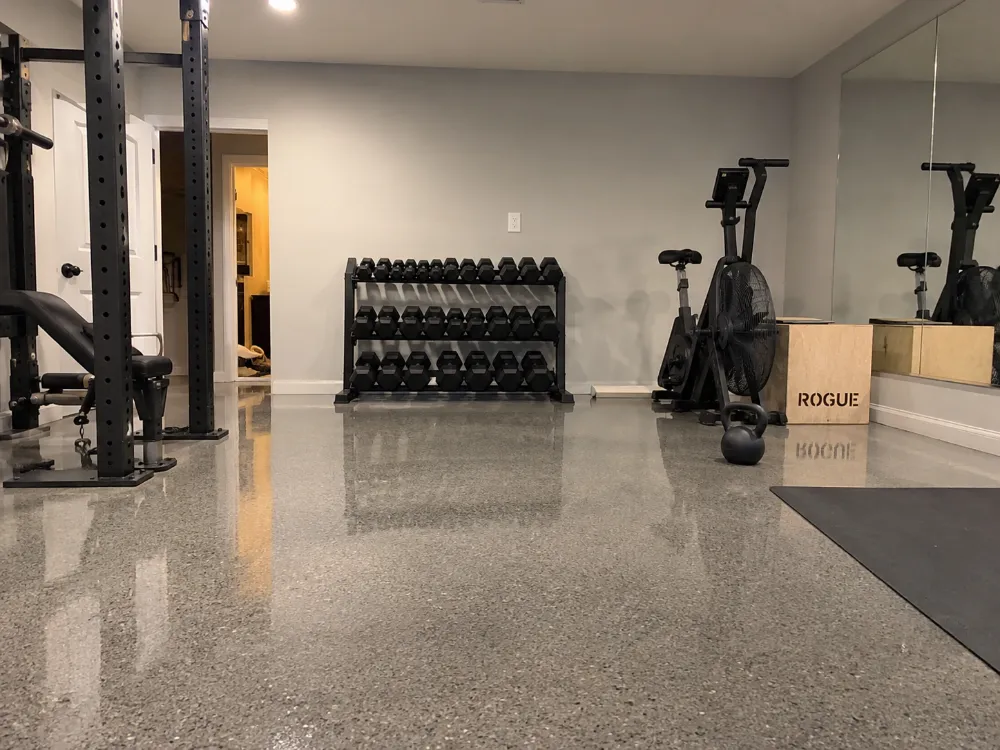
A properly installed epoxy system gives you a sealed, chemical- and impact-resistant base that a gym floor can sit on top of — or, for lighter use, stand on its own. It’s the same reason it’s become the default for commercial gyms and CrossFit boxes, just scaled down for a garage or basement.
Match the System to the Use
Which System Fits Your Setup
Click your gym type to see what we’d usually recommend.
Flake Broadcast, Full Prep
For a dedicated weight room, we lean on the same flake broadcast system we install in garages — it’s built for hot tires and heavy point loads, which translates directly to squat racks and dropped plates. Full diamond-grind prep matters even more here since this floor takes more abuse than a typical garage.
Most durable option for repeated impact.
What Gym Use Actually Does to a Floor
Equipment & Impact Considerations
Dropped Weights
A cured epoxy system handles occasional dropped dumbbells and plates fine. Repeated Olympic lifting onto bare epoxy will eventually chip the topcoat — rubber mats under a lifting platform solve this.
Rack & Equipment Feet
Stationary equipment left in one spot for years can leave faint indentation marks in the finish over time. Wide rubber feet or a mounting plate spreads the load and prevents it.
Sweat & Chalk Dust
Epoxy is sealed and non-porous, so sweat wipes up instead of soaking in, and chalk dust doesn’t stain. See our care guide for the cleaning routine.
Rolling Equipment
Bikes, rowers, and cardio machines with wheels roll smoothly on a seamless epoxy floor — no transitions or seams to catch casters the way tile or interlocking mats can.
A Common Question
Do You Still Need Rubber Mats?
Short answer: it depends on what you’re lifting. Epoxy isn’t a substitute for mats under a dedicated lifting platform — it’s a substitute for bare, unfinished concrete everywhere else in the room.
Most home gym owners land on epoxy across the whole floor with rubber mats layered only under the barbell and rack. That gets the impact protection where it’s actually needed without covering the whole room in mats, and it still looks and cleans like a finished floor everywhere else.
Get My Free Estimate-
Bare epoxy is fine for
Cardio zones, dumbbell racks, stretching areas, and general floor space — anywhere without repeated barbell drops.
-
Layer mats under
A dedicated lifting platform or squat rack footprint where plates get dropped from height regularly.
-
Mats sit on top, not glued down
Interlocking rubber tiles or a horse-stall mat simply sit on the cured epoxy — no adhesive needed, and they can be rearranged as your setup changes.
Before You Book
Getting Your Gym Floor Set Up Right
Know Your Equipment Footprint First
Where the rack, platform, and heavy equipment will sit affects the system we recommend and whether extra build-up matters in that zone.
Get the Slab Assessed and Tested
Same prep standard as any install — moisture testing and diamond grinding, especially important in a basement gym where moisture is more likely.
Plan Your Mat Zones
Decide where rubber mats will sit before install day — it doesn’t change the coating, but it helps you budget for both pieces at once.
Give It the Full Cure Window
Wait the full cure time before moving heavy equipment back in — see our install guide for exact timelines. Loading a rack onto an undercured floor is the most common cause of early marking.
Gym Flooring FAQ
Questions About Home Gym Floors
Tell us about your setup and we’ll recommend a system during your free estimate.
Get a Free Estimate- Yes for normal dumbbell and kettlebell use. For repeated Olympic lifting where bars and plates get dropped from height, we recommend rubber mats over the epoxy under that specific area rather than relying on bare coating alone.
- No — most home gyms only need mats under the lifting platform or rack footprint. The rest of the room can stay bare epoxy, which is easier to clean and looks more finished than wall-to-wall matting.
- Not with normal use, though stationary equipment left in one exact spot for years can leave faint marks. Wide feet, a mounting base, or moving equipment occasionally prevents that.
- Our standard flake broadcast system already builds up multiple coats and is rated for garage and gym-level use — we don’t typically need a specialty industrial thickness for a residential home gym. We’ll confirm the right spec once we know your equipment.
- If the existing coating is in good condition, sometimes a fresh topcoat is enough. If it’s worn, peeling, or not rated for the use you have planned, we’ll usually recommend grinding it off and starting fresh rather than coating over a failing system.
Free Estimates
Build a Home Gym Floor
That Can Take a Beating
Tell us about your equipment and setup — we’ll recommend the right system and give you a clear written price.
Get My Free Estimate